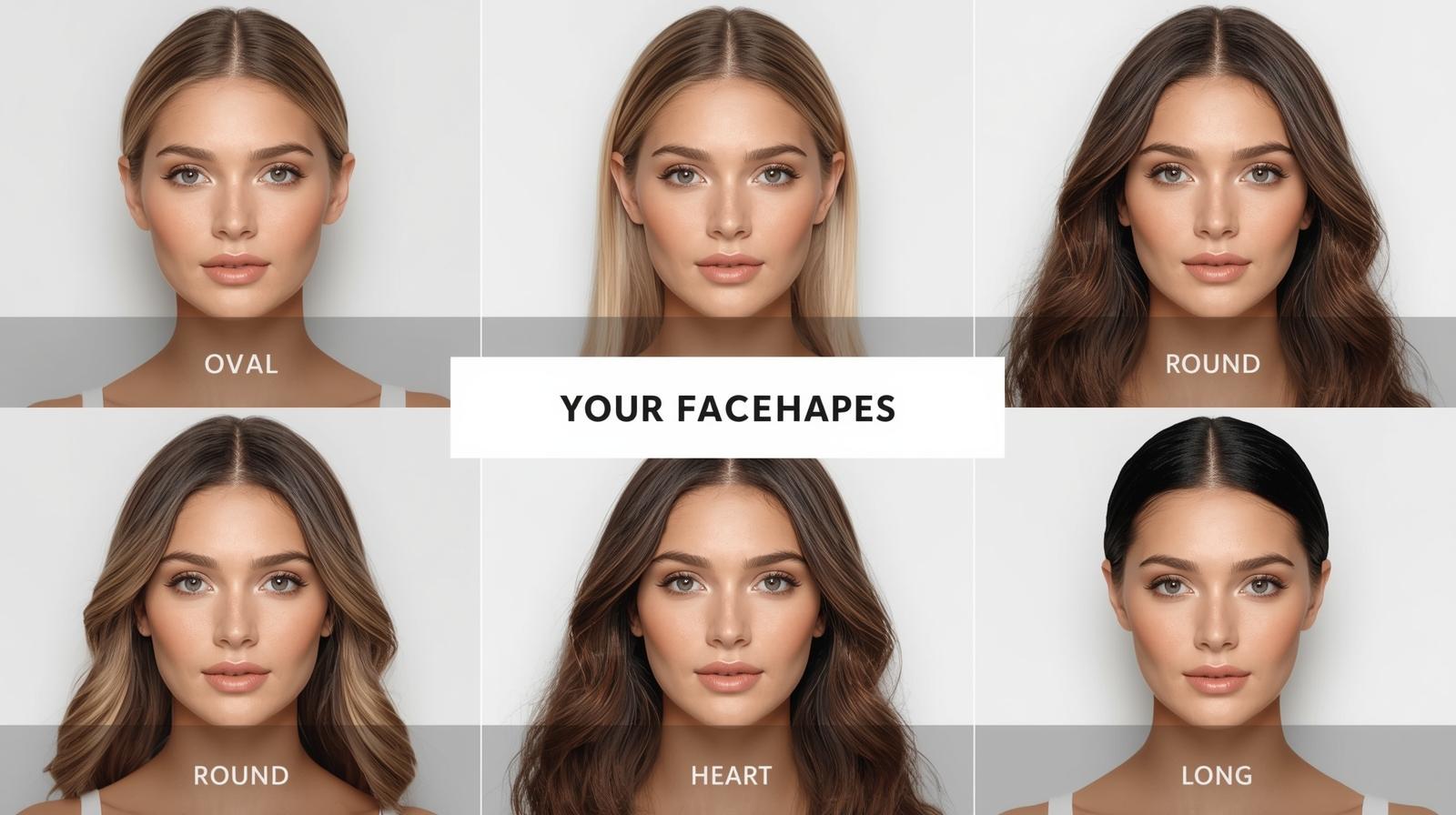
Understanding your face shape is essential for choosing the right hairstyles, makeup techniques, glasses, and even beard styles that enhance your natural features. Face shape refers to the overall outline and proportions of your face, which can fall into several categories like different face shapes circle, square, rectangle, heart, diamond, oval. Whether you’re exploring face shapes for beauty advice or personal styling, knowing how to identify your face shape can transform your look.
In this article, we’ll dive deep into face shape identification methods, characteristics of various face shapes, and practical tips tailored to each. From measuring your face shape to selecting flattering accessories, this guide covers everything about it. By the end, you’ll confidently determine if your face is round like a circle, angular like a square, elongated like a rectangle, pointed like a heart or diamond, or balanced like an oval.
What Is a Face Shape and Why Does It Matter?
Face shape is determined by the bone structure, including the forehead, cheekbones, jawline, and chin. It’s not just about aesthetics; understanding your face shape helps in selecting clothing necklines, jewelry, and even hats that complement your features. For instance, different shapes influence how light and shadow play on your face, affecting makeup application. In 2025, with AI tools and apps making identification easier, knowing your face shape has become more accessible than ever.
Experts categorize face shapes into primary types: circle (often called round), square, rectangle (or oblong), heart, diamond, and oval. Each has unique traits that guide styling choices. According to beauty professionals, aligning your look with your face shape can boost confidence and create harmony in your appearance.
How to Identify Your Face Shape: Step-by-Step Guide
Identifying your face shape is straightforward with a few measurements. You’ll need a flexible tape measure, a mirror, and good lighting. Follow these steps for accurate results.
Step 1: Measure Your Face Length
Start by measuring from the center of your hairline to the tip of your chin. This gives the vertical length, crucial for distinguishing elongated shapes like rectangle from shorter ones like circle.
Step 2: Measure Your Forehead Width
Measure across your forehead at its widest point, usually halfway between your eyebrows and hairline. Wide foreheads are common in heart and oval face shapes.
Step 3: Measure Your Cheekbones
Find the widest part of your cheekbones by measuring from the outer corner of one eye to the other. Prominent cheekbones define diamond face shapes.
Step 4: Measure Your Jawline
Measure from the tip of your chin to just below your ear, then multiply by two for the full width. A strong jawline indicates square or rectangle shapes.
Step 5: Compare Measurements
Now, analyze: If length and width are similar, you might have a circle or square face shape. If length is significantly longer, consider rectangle or oval. A tapering jaw suggests heart or diamond.
For tech-savvy users, apps like AI face shape detectors can scan a photo and provide instant results, enhancing accuracy.
Exploring Different Face Shapes: Characteristics and Examples:
Let’s break down the main face shapes, including circle, square, rectangle, heart, diamond, and oval. Each section includes key features, celebrity examples, and styling tips to help you relate.
Circle (Round) Face Shape:
A circle face shape, also known as round, features soft, curved lines with equal length and width. The cheeks are the fullest part, and the jawline is gentle without sharp angles.
Characteristics:
– Forehead and jawline are rounded.
– Cheekbones are not prominently defined.
– Overall soft and youthful appearance.
Celebrity examples: Selena Gomez, Emma Stone
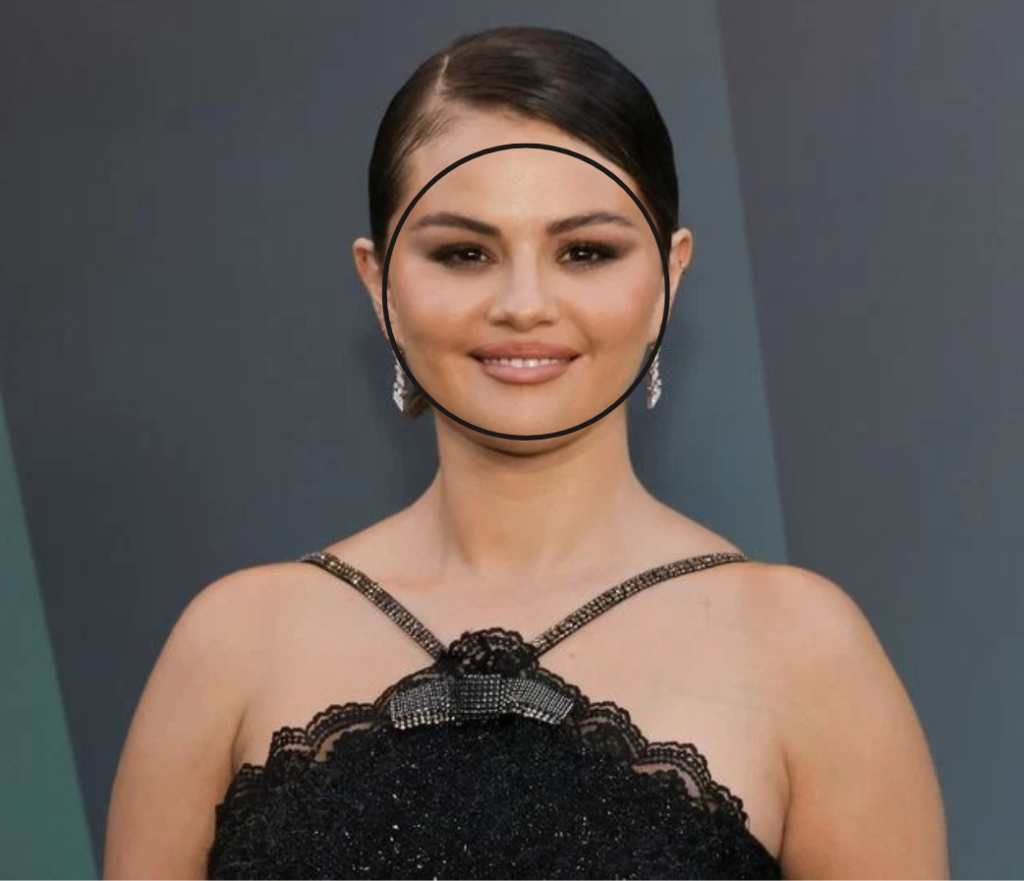
For those with this face shape, opt for hairstyles that add height, like layered cuts or high ponytails, to elongate the face. Avoid blunt bobs that emphasize roundness. In makeup, use contouring on the cheeks and jaw to create definition. Glasses with angular frames, like rectangular ones, contrast the softness effectively.
Square Face Shape
Square face shapes have strong, angular features with equal forehead, cheekbone, and jaw widths. The jawline is prominent and squared off, giving a bold look.
Characteristics:
– Wide forehead and strong jaw.
– Face length nearly equals width.
– Angular bone structure.
Celebrity examples: Angelina Jolie, Keira Knightley.
Styling tips: Soften edges with wavy hairstyles or side-swept bangs. Makeup should focus on highlighting cheekbones while blending jaw contours. Square faces suit round or oval glasses to balance the angles. For beards, keep them short to avoid adding more width. Rectangle (Oblong) Face Shape
Rectangle face shapes, or oblong, are elongated versions of squares. The face is longer than wide, with straight sides and a defined jaw.
Characteristics:
– Longer face length compared to width.
– Parallel forehead and jawline.
– High cheekbones.
Celebrity examples: Sarah Jessica Parker, Adam Driver.
To flatter this shape, choose hairstyles with volume on the sides, like curls or shoulder-length cuts, to add width. Avoid long, straight hair that elongates further. Makeup: Use horizontal blending for eyes and lips. Oblong faces look great in wide-framed glasses or aviators.
Heart Face Shape
Heart face shapes widen at the forehead and taper to a pointed chin, resembling an inverted triangle.
Characteristics:
– Broad forehead and cheekbones.
– Narrow, pointed chin.
– Often includes a widow’s peak.
Celebrity examples: Reese Witherspoon, Ryan Gosling.
Tips: Balance the top-heaviness with chin-length bobs or layers around the jaw. Makeup should emphasize the lower face with bold lips. Heart shapes pair well with upswept glasses frames to draw attention downward.
Diamond Face Shape
Diamond face shapes highlight high, wide cheekbones with narrower forehead and chin.
Characteristics:
– Narrow forehead and jaw.
– Prominent cheekbones.
– Angular overall.
Celebrity examples: Halle Berry, Robert Pattinson.
Enhance with hairstyles that add volume at the top and bottom, like pixie cuts or long layers. Contour cheekbones lightly. Diamond faces suit cat-eye or oval glasses for harmony.
Oval Face Shape
Oval face shapes are balanced, with slightly wider cheekbones and gentle tapering.
Characteristics:
– Length 1.5 times width.
– Rounded jaw and forehead.
– Versatile for styles.
Celebrity examples: Beyoncé, George Clooney.
Almost any hairstyle works, from short crops to long waves. Makeup is flexible; experiment freely. Oval faces can wear most glasses styles.
Tips for Flattering Your Face Shape with Hairstyles and Makeup
Once you’ve identified your face shape, apply these tailored tips. Hairstyles for Different Shapes
– Circle: Add height with volume.
– Square: Soften with waves.
– Rectangle: Add side volume.
– Heart: Frame the chin.
– Diamond: Balance widths.
– Oval: Versatile options.
Makeup Techniques
Contour to sculpt: Darker shades for recession, lighter for emphasis. For example, square faces benefit from jaw softening. Glasses and Accessories for Each Face Shape
Choose frames that contrast your shape: Round for squares, angular for circles.
Common Mistakes in Identifying Face Shape
Avoid relying solely on selfies; use mirrors for accuracy.
Weight changes can alter perceptions, so re-measure periodically.
Conclusion: Embrace Your Unique Face Shape
Knowing your face shape empowers personalized style. Whether circle, square, rectangle, heart, diamond, or oval, celebrate your features. Experiment and consult professionals for best results.